A Toy Rotation Storage Plan with Clear Groups and Easy Returns
Rotating a few suitable play materials can make an existing collection easier to manage. Decide what remains available, where reserve items live and how adults check the collection. This is an organization method, without a claim that rotation produces a developmental result.
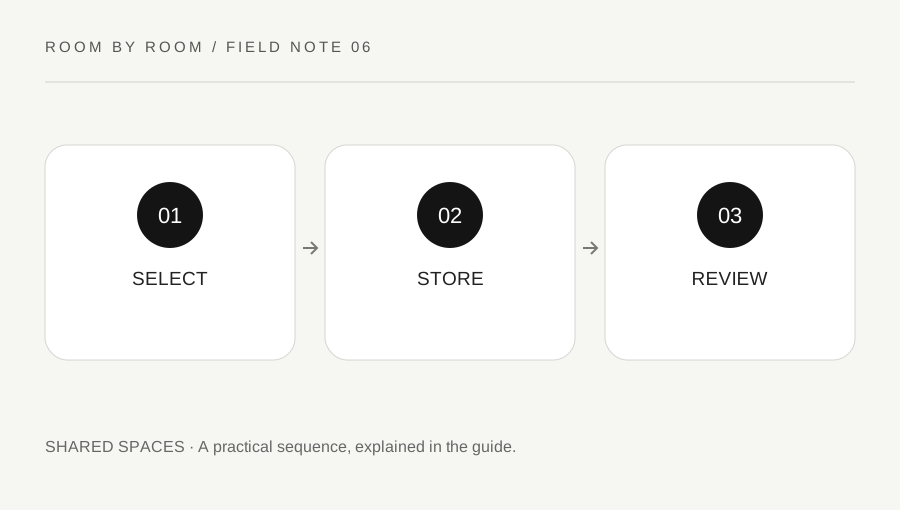
Original explanatory diagram. Examples illustrate a method or decision; they are not claims of personal testing.
Begin with the actual children and materials
Review toys with the responsible adult, using the product's age and use information and the needs of the children who may access them. Keep a set together so an important component does not disappear into a different rotation group. Distinguish a toy that is simply not in current use from one that is damaged, incomplete or subject to a safety concern.
Use the manufacturer's information and relevant official recall source when evaluating a product concern. A storage system cannot make an unsuitable toy appropriate. This article does not assess a particular toy or offer developmental advice. Its scope is the practical organization of already suitable materials under the responsible adult's supervision and decisions.
Choose reserve storage carefully
Keep reserve materials in an appropriate location with controlled access where needed. Avoid placing attractive toys where a child may climb furniture to reach them. Follow the furniture's actual installation and anti-tip instructions. CPSC's Anchor It campaign is a primary background resource for furniture tip-over prevention; it does not provide a wall-fixing assessment for your room.
Pay attention to the storage container itself. CPSC has warned about entrapment and lid hazards in storage and toy chests. Do not treat any large decorative trunk as suitable toy storage simply because it fits the collection. Use an appropriate product according to its instructions and seek the responsible manufacturer's guidance where safety is uncertain.
Use simple identifiable groups
Group by a meaningful play material or set, such as a particular construction set or drawing supplies appropriate to the actual users. A clear picture label may help a household identify a group, but it is an organization choice rather than a teaching claim. Keep the number of active groups manageable for the available room and return routine.
Avoid an inflexible schedule that requires switching every set on a particular weekday regardless of use. Observe what is actually being used and what remains practical to store. If a child is engaged with an appropriate ongoing project, the responsible adult can decide whether preserving it is useful. The page should support a real household arrangement, not create a rule that interrupts every activity.
Work through a small collection example
Imagine a household with a construction set, a pretend-play set and a drawing group. The adult leaves the appropriate construction and drawing materials available in their usual places, while a complete pretend-play set moves to suitable reserve storage. A short label identifies the group and any important parts that must return together.
At a later review, the adult checks the materials and decides whether changing the active selection would help the actual routine. They do not infer a learning outcome from the number of containers or the frequency of change. This invented example illustrates group management. It should be adapted to the real children, products, supervision and space rather than copied as a universal play schedule.
Make the return routine part of the plan
Choose a usable home for active materials and check whether they can be returned without forcing lids or creating unstable piles. Allow enough time for the responsible adult to check sets where needed. Keep room paths available and avoid using exit areas as temporary reserve storage. USFA's escape-planning information provides background on maintaining usable routes.
Review any group that repeatedly returns incomplete or does not fit its container. Change the grouping or storage rather than blaming the child for an arrangement that adults cannot use easily either. Keep a short inventory only when it solves a real problem. A useful rotation plan stays modest, makes appropriate materials findable and preserves clear decisions about storage and supervision.
A practical checklist
Choices are saved in this browser. Reset them here or clear this site’s browser storage.
Questions that come up
Does rotation guarantee better development?
No. This guide makes no developmental claim. It is a household organization method for suitable materials under the responsible adult’s decisions.
Can any chest hold reserve toys?
No. The container itself must be appropriate. Consult product instructions and CPSC information on storage and toy chest hazards.
Must I change toys every week?
There is no fixed schedule in this method. Review actual use and the household arrangement rather than rotating solely to fill a calendar.
References & scope
Background references checked on 18 October 2026. Worked examples and diagrams are original teaching material.