Small Bedroom Storage That Keeps the Bed and Closet Usable
Extra storage is useful only when it does not make the bedroom harder to use. Start with the clothes and objects that truly belong there, then measure the available spaces. This approach prioritizes access and manageable routines over filling every gap with a container.
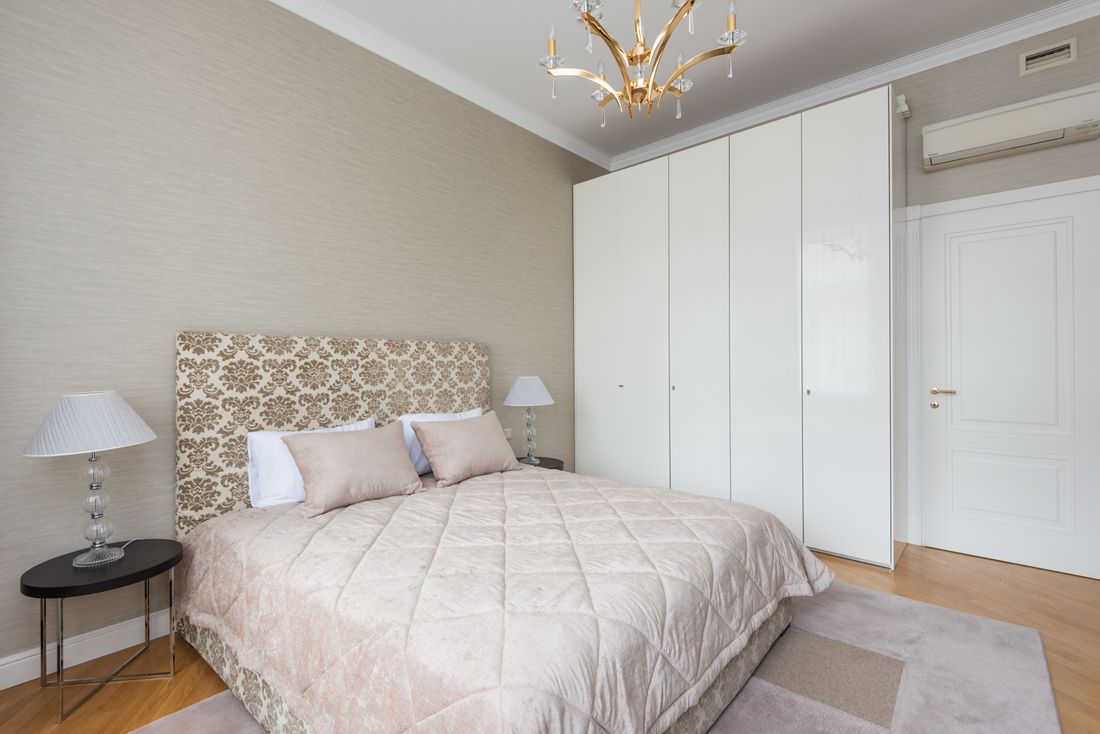
Photo: Max Vakhtbovych · License. Illustrative stock photography.
Decide what belongs in the bedroom
Separate clothing, bedding, personal items, work supplies, and belongings waiting to leave the home. Move unrelated storage out if another appropriate location exists. Keep a realistic number of active categories rather than treating the bedroom as overflow for the entire apartment. An inventory does not require a dramatic purge: count drawers, hanging space, and the items that need a home. The first goal is to understand capacity, not to buy a matching storage system.
Measure access as well as empty space
For each possible storage position, note width, depth, and height, then test the opening movement. A box under the bed is not useful if you must move a heavy nightstand every time you retrieve it. Measure the usable opening beneath the frame rather than the bed's advertised height. Leave access to room exits, windows where required, heating equipment, and normal cleaning. Do not fill an available-looking gap that serves another practical purpose.
Put daily clothing in easy reach
Place frequently worn items where they can be seen and retrieved without unpacking several containers. File-folding can help with some garments; hanging may work better for others. The system should match the clothing and the person using it. Give socks, underwear, and small accessories clear compartments, but keep the dividers adjustable until the categories settle. A neatly arranged drawer is successful when it remains understandable after laundry day, not merely after the first organization session.
Use under-bed space selectively
Reserve low-access storage for appropriate occasional items such as spare bedding or seasonal clothing, provided the area and items' care requirements permit it. Measure a container with its handles and lid included. Choose a size you can lift and move when full, and label the visible edge. Avoid storing damp belongings in a closed box. Keep the number of containers limited so the area can still be inspected and cleaned without a major room rearrangement.
Choose vertical furniture responsibly
A taller cabinet may hold more than a low unit, but its height does not make it an automatic solution. Check construction, load limits, and the manufacturer's anti-tip instructions before purchase. Do not place heavy or tempting items high on furniture where someone might climb to reach them. Keep the things used most often in accessible positions. When a rental wall cannot accommodate required securing, resolve that limitation before buying the furniture rather than ignoring the requirement afterward.
Build an overflow rule
Leave a little practical capacity for laundry and seasonal change rather than filling every shelf to its maximum on day one. Use a small review bag for items needing repair, donation, or another decision, and set a specific date to handle it. Do not let the review bag become a permanent hidden category. If one drawer consistently overflows, reconsider its contents and purpose. Storage works best when the amount kept and the available space agree.
Your working checklist
Checkmarks stay in this browser when storage is available. They do not submit a form or complete a booking.
Put it into practice
- Inventory the categories already in the room and count their storage positions. Remove objects that belong elsewhere, then record which clothing types actually overflow rather than reorganizing every item at once.
- Measure usable closet, drawer, and under-bed space. Test drawer travel and retrieval routes, and write down any furniture securing requirements before considering additional cabinets or tall shelving.
- Arrange daily clothing at the easiest access points and put suitable occasional items in labeled lower-access storage. Use existing containers first so the categories can change without another purchase.
- Run the system through a complete laundry cycle. Notice where clean clothing stalls, reduce any overfilled category, and choose the smallest targeted purchase only after the new arrangement proves useful.
Before you finish
- Bed remains accessible
- Drawers open fully
- Daily clothes are reachable
- Boxes can be moved
- Furniture instructions are followed
- Overflow has a review date
Common questions
Is under-bed storage always a good idea?
No. It depends on the frame, room conditions, item care, and retrieval access. If boxes block cleaning or are difficult to pull out, another location or a smaller inventory may work better.
Should every clothing category use a divider?
Only when a divider makes items easier to find and return. Large garments often need open space. Too many small compartments can create more maintenance than they save.
Can I stack two small dressers for more storage?
Do not improvise stacked furniture. Use products only as designed and follow assembly and anti-tip instructions. A purpose-designed compatible system is different from placing independent furniture pieces on top of each other.