Shared Kitchen Cupboards: Agree Useful Zones Without Losing Everyone’s Things
A shared cupboard needs understandable locations and agreement about what belongs where. Start with everyday retrieval and return, then separate shared equipment from personal items. Keep appliance and product storage requirements in view while simplifying the layout.
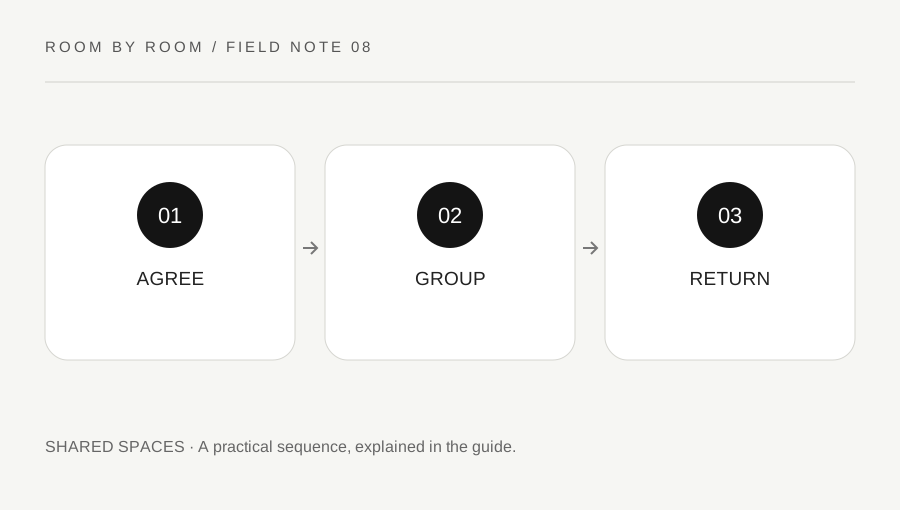
Original explanatory diagram. Examples illustrate a method or decision; they are not claims of personal testing.
Ask the users before rearranging
Find out which cups, dishes and ordinary kitchen tools people use and where they expect to find them. Separate a genuinely shared collection from belongings that remain personal. Do not discard a duplicate-looking mug or move a special item into inaccessible storage without asking its owner. A shared kitchen needs a practical agreement, not a surprise reveal.
Work one area at a time so the room remains usable. Keep counters, walking routes and required appliance access available while sorting. This guide focuses on cupboards for ordinary equipment, not food preservation, cleaning chemical storage or appliance installation. Follow the actual requirements for products and equipment rather than inferring suitability from the convenience of a proposed shelf.
Group by the moment of use
Place related everyday items together when that supports a real task: frequently used mugs, an ordinary plate group or a set of matching containers with their appropriate lids. Keep the arrangement understandable to someone who did not design it. A broad useful zone is often easier than several tiny categories that require constant explanation.
Consider the actual users' reach and comfort. An item used daily should not require moving a large stack of unrelated dishes each time. Keep shelf loading and furniture installation within their specified instructions. Do not add a freestanding unit or improvised shelf insert without checking its actual use and capacity. More vertical levels are useful only if the resulting storage remains accessible and appropriate.
Use an ordinary shared-cupboard example
Imagine three housemates with a shared plate collection and personal mugs. They agree that plates remain in one easy-to-reach area, while each person chooses a small identifiable mug group. A separate container-and-lid zone holds sets that actually match. Unmatched pieces go into an agreed decision area for a limited review, with owners asked before anything leaves the household.
During the following week, the housemates check whether the arrangement works after washing-up, when several items return together. One shelf is too crowded to accept the whole plate group, so they revise the space. This invented example illustrates how the return routine can reveal a problem that a tidy initial arrangement concealed.
Use labels that answer a real question
A small removable label can help visitors or newer household members return items. Use ordinary words such as everyday bowls rather than a private code. Check that any label or adhesive is appropriate for the cupboard surface. If everyone already knows the location and the label solves no confusion, it may not be necessary.
Explain what happens when something has no clear home. A temporary agreed spot can be useful if it has an actual review process; an indefinitely growing miscellaneous box only moves the uncertainty. Keep product instructions and identification with equipment where they matter. Organization should make an unfamiliar object easier to identify, not remove the information needed to use or store it properly.
Review shared use without assigning blame
After real meals and washing-up cycles, ask which return step is awkward. A cupboard door may restrict access, a stack may be too tall or a personal item may need a more suitable location. Address the specific problem and confirm changes with the people affected. Avoid treating every misplaced item as proof that someone ignored the system.
Keep escape routes and required service access clear, using actual property and product instructions for the room. CPSC furniture information and USFA home escape resources provide background context where the layout affects furniture or routes. The aim is a shared cupboard that people can use and restore in ordinary life, with belongings respected and enough practical space for the real collection.
A practical checklist
Choices are saved in this browser. Reset them here or clear this site’s browser storage.
Questions that come up
Should duplicate items automatically be removed?
No. Ask their owners and consider actual use. Similar-looking belongings may be personal or serve different practical purposes.
Do I need matching organizers?
No. Test useful groups and accessible space first. An extra container should solve a specific problem rather than merely create a uniform appearance.
What if the arrangement keeps failing?
Observe the awkward return step and revise that part with the users. A simpler accessible layout may work better than more labels.
References & scope
Background references checked on 18 October 2026. Worked examples and diagrams are original teaching material.