A Shared Bathroom Counter with Clear Daily Zones
A shared counter works better when everyday items have an agreed small footprint and occasional supplies live elsewhere. Begin with the people and routines, then make the surface easier to use and reset without mixing up personal belongings.
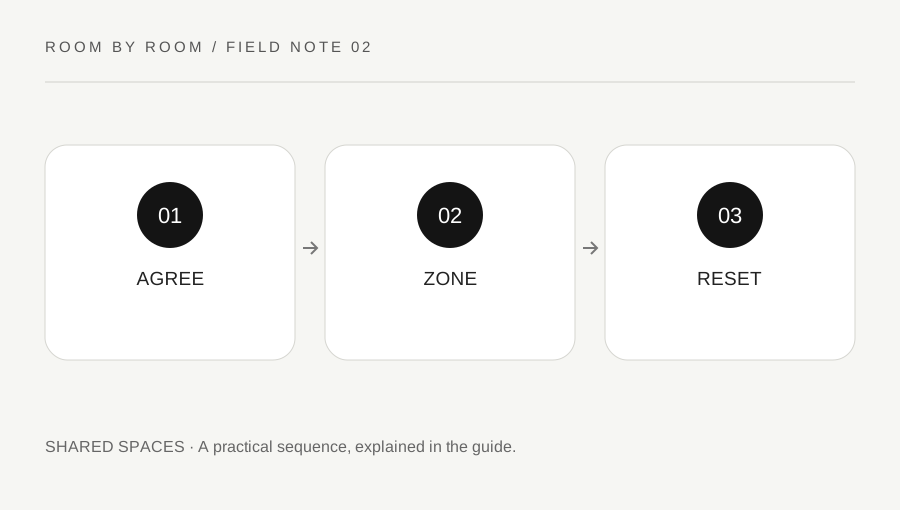
Original explanatory diagram. Examples illustrate a method or decision; they are not claims of personal testing.
Observe the counter during normal use
Notice which items arrive each morning and which remain on the surface all day. Separate shared items from personal belongings, asking before moving or discarding anything that belongs to someone else. A bottle that looks unused may still be part of another person's routine. Do the review when the bathroom can remain usable, rather than covering the basin with every cupboard's contents.
Identify the clear space needed for ordinary washing and cleaning. Keep access to taps, outlets and any required ventilation unobstructed. This is a surface organization guide, not an electrical or plumbing modification project. Follow actual appliance instructions and appropriate professional guidance for anything that needs a specific clearance, installation or repair.
Agree a small daily area for each person
Use a tray or an existing designated area when it helps keep everyday items together. Choose a size that leaves the shared surface usable. A larger tray may simply preserve the same overcrowding behind a new border. Check whether a person can lift or move their group easily when the surface needs cleaning.
Keep products in their appropriate original packaging where its instructions or identification matter. Do not decant an unknown liquid into an unlabelled decorative container to achieve a uniform appearance. Store medicines, cleaning chemicals and other products according to their own requirements and the household's needs, with particular attention to appropriate access controls. A counter styling method cannot determine safe storage for every product.
Work through a two-person example
Imagine two people sharing a narrow counter. Each chooses a small group of genuine daily-use items, while a shared hand-washing item remains in an agreed central position. Occasional accessories move to an appropriate nearby location. The goal is to free a usable landing area and make each person's belongings recognizable.
During the following week, both people try returning their items after use. One discovers that the proposed cupboard is difficult to reach during the actual routine. They adjust that location instead of treating a failure to return an item as a personal fault. This invented example shows why a storage position should be tested with real movement, rather than judged only by its appearance when nobody is using the room.
Make cleaning and returning possible
Choose arrangements that can be moved without juggling loose items over the basin. Keep the surface treatment and any container's care instructions in mind when cleaning. Avoid adding improvised adhesive shelves or fixtures without checking the product and property requirements. More vertical storage is useful only when the installation and access are appropriate.
Agree what happens to items temporarily left out. A simple ask-before-moving convention can prevent personal belongings from disappearing into a miscellaneous box. Avoid assigning a new home to another person's item without discussion. The shared routine should be clear enough to follow on an ordinary rushed morning, not depend on one person silently restoring the entire counter every day.
Review the layout after actual use
After several ordinary days, look at what repeatedly remains outside its zone. It may need a more accessible home, a clearer label or an agreed reduction in daily items. Do not automatically respond by buying a second organizer. First identify the exact access problem that the extra object would solve.
Keep bathroom doors, paths and required service access available. The US Fire Administration's home escape guidance is a background reminder to preserve usable routes; it does not specify the dimensions of this counter arrangement. Finish with a shared understanding of the zones and a brief return routine. A successful layout gives both people enough room to use the bathroom and find their own belongings.
A practical checklist
Choices are saved in this browser. Reset them here or clear this site’s browser storage.
Questions that come up
Should every item be hidden?
No. A few accessible daily items may work well. Focus on useful clear space and an arrangement the people using it can maintain.
Can I transfer products into matching bottles?
Preserve required identification and product instructions. Decorative uniformity should not create uncertainty about a product or its use.
What if one person uses more items?
Agree workable space based on actual routines. An equal number of containers is less useful than a shared arrangement both people can use.
References & scope
Background references checked on 18 October 2026. Worked examples and diagrams are original teaching material.