Store Seasonal Decorations by Room, Condition and a Clear Packing Order
A decoration box should tell you what is inside and how it can be unpacked next time. Separate room groups, note an item’s condition and make fragile contents easy to identify. Check actual product instructions for anything with special storage needs.
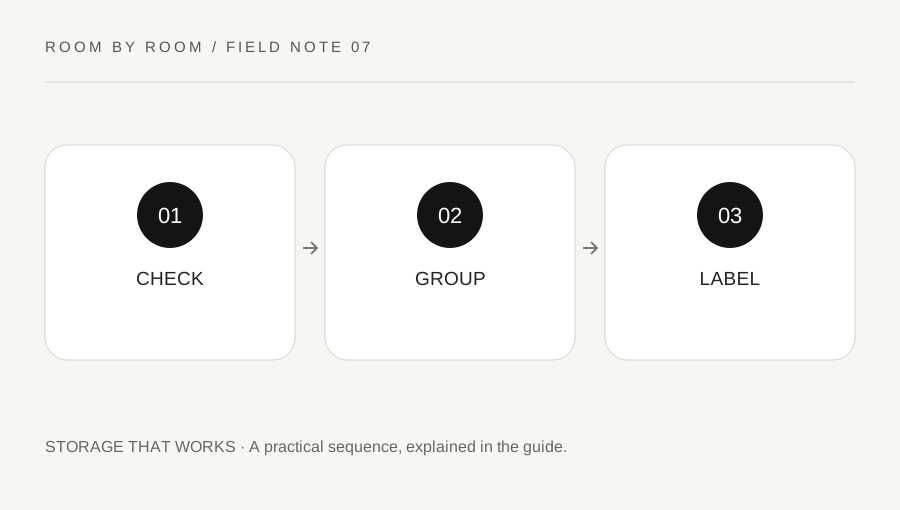
Original explanatory diagram. Examples illustrate a method or decision; they are not claims of personal testing.
Review condition before packing
Work in manageable groups and inspect each item before returning it to storage. Distinguish ready to store from needs a decision. A damaged decoration should not disappear into a carefully labelled box that implies it is ready for the next season. Ask the owner before disposing of or altering sentimental items.
For electrical, battery-powered or otherwise specialized products, follow the actual manufacturer's instructions for disconnection, handling and storage. This article is not an electrical inspection or a repair guide. Do not improvise a fix for damage. Put an unresolved product concern into a separate clearly identified decision process rather than relying on a decorative label to make the item suitable for use.
Choose groups that match unpacking
Group by room or by a meaningful display arrangement when that is how the household sets up decorations. Keep a complete small display together where appropriate, including its ordinary non-sensitive placement note. A group called hallway display can be more useful than an unexplained box number if there are only a few boxes.
Separate fragile items with packaging suitable for the actual material, following product guidance where supplied. Avoid compressing delicate pieces to fit an attractive container. Check the usable dimensions, lid clearance and loaded weight of each box. A large container may reduce the number of boxes while making one difficult lift that the household cannot manage comfortably.
Make one practical box label
Imagine a household packing a simple tabletop winter display. The label names the room, the general contents and the packing date. It also states that one stand needs a decision before reuse, with the unresolved stand kept separately rather than hidden beneath intact pieces. A small sketch inside the lid records the arrangement if that will help next time.
The box label does not list private household schedules or display access instructions. It gives enough information to identify the contents without advertising unnecessary personal detail. This invented example illustrates a useful packing record. It does not establish that any particular storage temperature, packaging or handling method is suitable for every decoration material.
Plan the storage position with the real box
Use appropriate shelving or storage according to its instructions and capacity. Consider the actual loaded container, not only its empty dimensions. Keep ordinary access routes and required service areas usable. Do not stack boxes precariously or create a need to climb unsuitable furniture to retrieve an occasional item.
Follow the actual furniture installation and anti-tip requirements where relevant. CPSC's Anchor It information and USFA's escape-planning guidance provide background for keeping the surrounding room usable and reducing furniture hazards. They do not supply a structural assessment or a safe lifting method for your particular storage area. Obtain appropriate help for an access or installation problem.
Leave a clear starting point for next time
Place the first-needed group where it can be identified without unpacking everything. Keep an inventory short: group, location and unresolved issue may be enough. If decorations are distributed across several places, use the same meaningful group names on the boxes and in the index. A count of boxes is useful only when it refers to actual packed boxes.
At the next setup, check condition and current product guidance again where needed rather than assuming storage preserved everything perfectly. Update the label after the display changes. The useful result is an understandable collection that can be retrieved, checked and returned, with fragile and unresolved items visible in the plan instead of buried inside a generic seasonal box.
A practical checklist
Choices are saved in this browser. Reset them here or clear this site’s browser storage.
Questions that come up
Should all decorations go in one large box?
Only if the container and loaded weight are appropriate and the grouping remains usable. Fewer boxes do not automatically mean easier handling.
Can I pack damaged electrical decorations for later?
Keep the concern clearly identified and follow the actual product guidance. This guide does not assess or repair electrical products.
Do labels prove an item is ready to use?
No. Check the actual item and relevant instructions before reuse. A label is an index, not a safety certification.
References & scope
Background references checked on 18 October 2026. Worked examples and diagrams are original teaching material.