Organize a Linen Cupboard by Use, Size and a Realistic Return Routine
A linen cupboard needs to accept clean items as easily as it gives them out. Group by actual use, keep sizes identifiable and leave room for the next return. This is an organization method, with laundering left to each item’s care instructions.
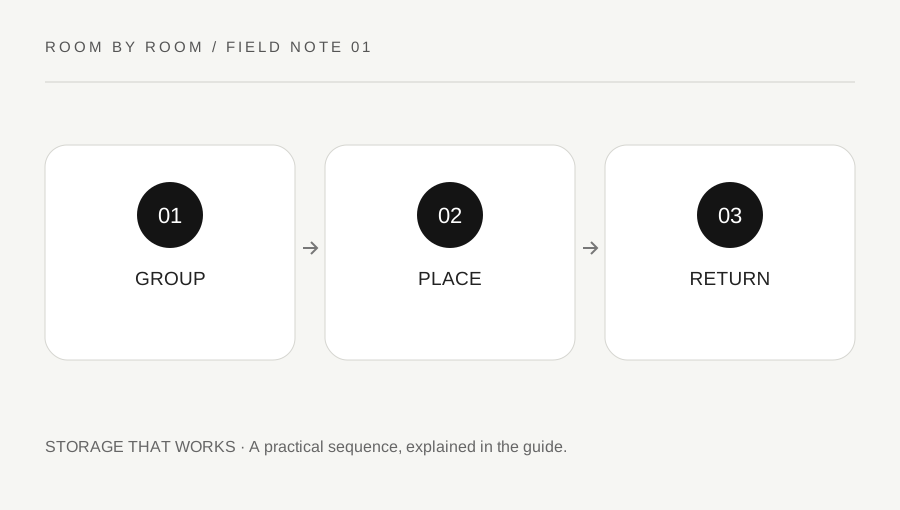
Original explanatory diagram. Examples illustrate a method or decision; they are not claims of personal testing.
Start with the jobs the cupboard serves
List what the cupboard actually holds: bed linen for particular beds, everyday towels, spare blankets or occasional guest supplies. Group items on a clear surface in manageable batches rather than emptying the entire cupboard into a busy walkway. Keep the household's normal access routes available while you work.
Identify sets and sizes from their actual labels or known fit. Do not rely on remembering which similar white sheet belongs to which bed. A small removable shelf label can describe the group without attaching an unapproved adhesive to fabric. Set aside an item that needs a separate repair or care decision instead of folding it neatly into a stack that appears ready for use.
Place frequent items where returning them is easy
Choose accessible positions for the groups used most often, taking account of the people who actually use the cupboard. Keep stacks modest enough that removing one item does not pull out everything above it. Use the shelf's specified capacity and the cupboard's instructions rather than guessing that a visually empty space can hold an unlimited load.
If the cupboard is freestanding, follow its manufacturer's installation and anti-tip instructions. CPSC's Anchor It campaign provides background on preventing furniture tip-overs. This article does not supply a fixing method for a particular wall or unit. Obtain appropriate installation help where needed before relying on the storage arrangement.
Try one practical grouping example
Imagine a household with two bed sizes and one shared towel area. One shelf holds labelled groups for each bed size, and another holds everyday towels. A separate small section contains occasional guest linen. Within each group, the current usable set is easy to remove without dismantling a tall mixed pile.
The household tests the arrangement after the next real laundry return. If folded towels do not fit without compression, they reduce the stack or change the assigned space before buying containers. This invented example shows the value of checking a return routine. It does not prescribe a universal number of sheets or towels; that depends on the household's actual use, washing pattern and available space.
Use containers only when they solve a clear problem
A shallow container may help keep a small set together, but measure the usable shelf depth and opening first. Check that the container can be lifted comfortably with its actual contents. A rigid box that technically fits the shelf can still be awkward if the door or adjacent stack blocks its handles.
Avoid hiding damp items or care problems inside a closed container. Follow the item's care and storage instructions, and investigate an unusual smell or visible moisture through the appropriate household maintenance process. Organization should make the condition of stored linen easier to notice. A tidy-looking cupboard is not proof that its contents are clean, dry or suitable for immediate use.
Finish with a short reset routine
Label the main groups and leave a little usable space for items returning from ordinary use. Ask the other household members whether they can find and replace a set without an explanation. If the answer is no, simplify the grouping rather than adding several layers of colour codes and hidden categories.
After a few real returns, adjust the position of the most awkward stack. Record a size or location note inside the cupboard if useful, without collecting private household information on a public-facing label. The useful result is a storage arrangement that works during ordinary changeovers, not a photograph of perfectly compressed piles that cannot accept the next clean batch.
A practical checklist
Choices are saved in this browser. Reset them here or clear this site’s browser storage.
Questions that come up
How many sets should I keep?
There is no universal number in this method. Use actual household needs, the return routine and available space to make that decision.
Should I buy matching containers first?
Measure and test the grouping with what you have. Add a container only when it solves a specific access or separation problem.
Does this guide explain washing temperatures?
No. Use the actual textile care label and suitable laundry guidance for cleaning and drying decisions.
References & scope
Background references checked on 18 October 2026. Worked examples and diagrams are original teaching material.