Use One Dining Table for Meals and Projects with an Easy Changeover
A table can support meals, paperwork and a small creative project when changing its use is practical. Plan where unfinished materials go, what needs to stay clear and how the next person knows the surface is available.
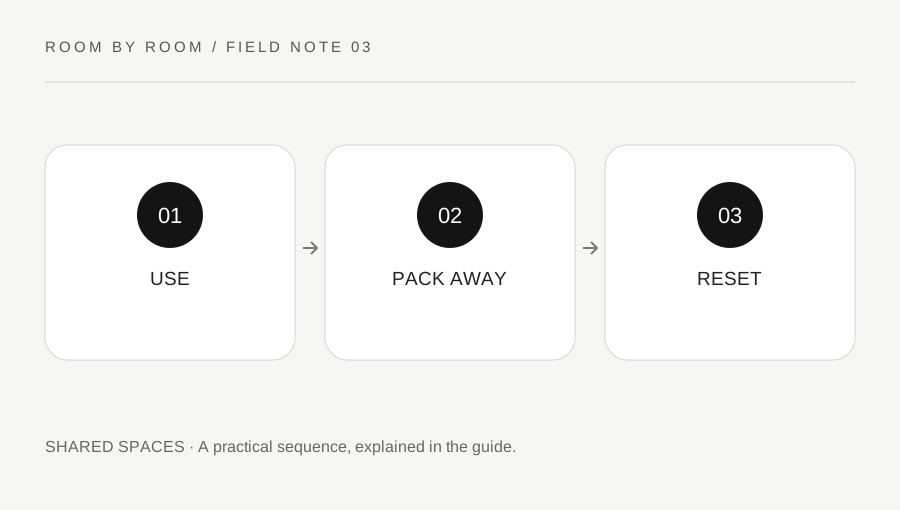
Original explanatory diagram. Examples illustrate a method or decision; they are not claims of personal testing.
Name the uses that genuinely need the table
List the activities the table actually supports and when they happen. A shared meal, an evening puzzle and occasional paperwork may fit differently from a project that must remain flat for several days. Ask the other regular users which activities and times matter to them. Do not assign the whole surface to one person's project by default.
Check the table's material and care instructions before placing tools, warm items or materials on it. A decorative cloth is not necessarily a suitable protective work surface. This article concerns ordinary organization, not suitability for a particular craft chemical, hot process or repair task. Use an appropriate workspace and actual product guidance for activities that need them.
Give unfinished work a realistic temporary home
Choose a nearby location where a project can wait without blocking the room. A shallow labelled tray may suit loose paper, while a delicate object may need a different arrangement. Measure the storage destination and test whether the real contents can be moved comfortably. A box that fits under the table is not useful if knees, chairs or a required route cannot move around it.
Keep one person's private paperwork out of a shared open tray. Use a suitable private storage method when information needs protection. Distinguish an active project from materials that no longer serve a purpose, asking the owner before making that decision. The table changeover works best when putting work away does not mean losing its order or exposing its contents.
Try a simple project-to-meal changeover
Imagine a household using the table for a paper illustration project before dinner. The artist groups the working pages in a suitable folder and small tools in an existing container. A short note identifies the next step. The materials go to their agreed temporary location, and the table is prepared for its next use according to the surface and activity requirements.
After the meal, the project can be restored without searching through several unrelated drawers. This invented example illustrates a contained transition, not a guarantee that every activity belongs on a dining surface. If the project cannot be moved safely or appropriately, the household needs a different location or timing agreement rather than a promise to clear it in a rush.
Agree what counts as ready for the next use
Define a simple shared reset: materials removed, necessary surface care completed and seating accessible. Avoid relying on a vague instruction to tidy up, which different people may interpret differently. If an activity has a specific cleaning requirement, follow that real instruction rather than assuming a visible wipe makes the table suitable for everything.
Keep table leaves, chairs and nearby storage within their intended use. Do not stack materials on unstable furniture or crowd an exit to make the main surface look clear. CPSC's furniture guidance and USFA's escape-planning resources provide background on preserving safe usable rooms. They are not a substitute for the manufacturer's instructions for the actual table and storage unit.
Adjust the system when changeover is too hard
Time one ordinary pack-away informally, noting which step creates difficulty. You do not need a stopwatch target; the useful observation may be that loose pages have no suitable folder or a storage shelf is already full. Address that specific problem before introducing a more elaborate scheduling system.
For a project that repeatedly occupies the table past the agreed point, discuss a dedicated temporary workspace or a smaller active portion. Keep the agreement visible if the household finds that helpful. A shared table remains useful when people can predict its availability and restart their own activity without frustration. The aim is a workable transition between real uses, not a permanent display of an empty tabletop.
A practical checklist
Choices are saved in this browser. Reset them here or clear this site’s browser storage.
Questions that come up
Must the table be empty all day?
No. It needs to be usable for its agreed purposes. A contained active project may be appropriate when the other users understand the arrangement.
What if a project cannot be moved?
Choose a different workspace or agree its timing and extent explicitly. Do not rely on a hurried improvised move.
Is a tablecloth enough protection for every activity?
No. Follow the table, tool and material instructions and use an appropriate work surface for the actual activity.
References & scope
Background references checked on 18 October 2026. Worked examples and diagrams are original teaching material.