Edit a Bookshelf for Reading Access, Current Projects and Clear Returns
A usable bookshelf helps you find a title and put it back without disturbing the whole row. Decide how you look for books, separate current-use material from display choices and respect the shelf’s actual capacity.
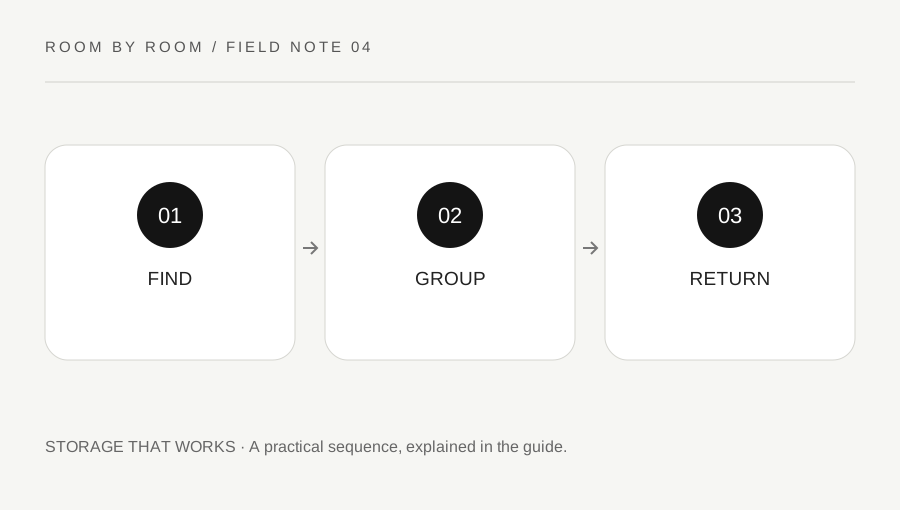
Original explanatory diagram. Examples illustrate a method or decision; they are not claims of personal testing.
Notice how you search for a book
Choose a grouping method that matches the questions you ask: subject, author, a particular project or reading status. Colour can be an enjoyable display choice, but it may not help someone looking for a reference title whose spine they do not remember. Discuss the arrangement with other people who use the same shelves.
Work one manageable area at a time, keeping access routes clear. Set aside books borrowed from elsewhere so they do not disappear into a permanent household category. Do not decide what another person should discard without asking. The purpose of the edit is to make a collection more usable, not to impose a uniform idea of how many books someone should own.
Check the furniture before changing the load
Read the unit's instructions for installation, loading and use. An empty-looking shelf does not reveal its weight capacity. Follow the specified limits and appropriate anti-tip requirements rather than estimating from appearance. CPSC's Anchor It campaign explains the importance of furniture tip-over prevention; it does not identify the correct fixing for a particular wall or bookcase.
Avoid balancing books or decorative items where they can fall during ordinary retrieval. Keep the useful depth of the shelf in mind. A second hidden row may increase the apparent capacity while making titles difficult to find and return. Do not treat a neat arrangement as evidence that the unit is safely installed or loaded.
Create a reading-oriented example
Imagine a reader with general fiction, a small reference group and material for one current project. Fiction follows a consistent author order, reference books sit together by subject and the current-project group has a labelled temporary section. A borrowed title remains visibly identified, with any due-date reminder kept in the reader's real calendar.
The reader leaves enough room to remove an ordinary book without pulling the whole row forward. They test the system by asking someone else to find a known title from its description. This invented example illustrates retrieval choices rather than a universal classification system. A collection used mostly for visual inspiration may need a different grouping from one used for frequent technical reference.
Give temporary piles a defined meaning
A short to-read or current-use group can be useful if it remains small enough to scan. Explain what belongs there and how it returns to the main collection. Otherwise every unfinished intention can become a permanent pile, hiding the books the reader actually wants to use next.
When a project ends, decide whether its books should return to their usual categories or remain together for a clear reason. Keep donation, sale or return decisions separate from ordinary shelving. Verify the receiving organization's current instructions before sending books elsewhere. A storage guide cannot determine what a library, charity or seller currently accepts, and the fact that a title leaves the shelf does not mean the transfer is complete.
Test ordinary removal and return
Take out a few differently sized books and replace them. Check whether labels remain readable and adjacent items stay stable. If a decorative object must be moved every time someone reaches a frequently used title, relocate that object or the title. Let actual retrieval show where the arrangement needs adjusting.
Preserve appropriate room access and keep the unit within its intended use. USFA's home escape guidance provides background for maintaining usable routes, without supplying a furniture layout for this room. Review the grouping after a few weeks of actual reading. The most useful bookshelf arrangement is the one that supports finding, reading and returning the books in the household's real routine.
A practical checklist
Choices are saved in this browser. Reset them here or clear this site’s browser storage.
Questions that come up
Should I sort every shelf by colour?
Only if that helps your own use or display goal. A title or subject-based system may be easier for frequent reference and shared retrieval.
Does filling every gap make better use of space?
Not necessarily. Consider load limits and the room needed to remove and return a book comfortably.
Can a neat arrangement replace anchoring?
No. Follow the actual furniture installation and anti-tip instructions. Appearance does not establish safe installation.
References & scope
Background references checked on 18 October 2026. Worked examples and diagrams are original teaching material.