Renter-Friendly Decorating: A Plan Built Around Permission and Portability
Decorating a rental can be thoughtful without assuming that every temporary product is suitable for every surface. Prioritize changes you can take with you, establish what the lease permits, and use a small palette to connect existing furniture before buying a roomful of accessories.
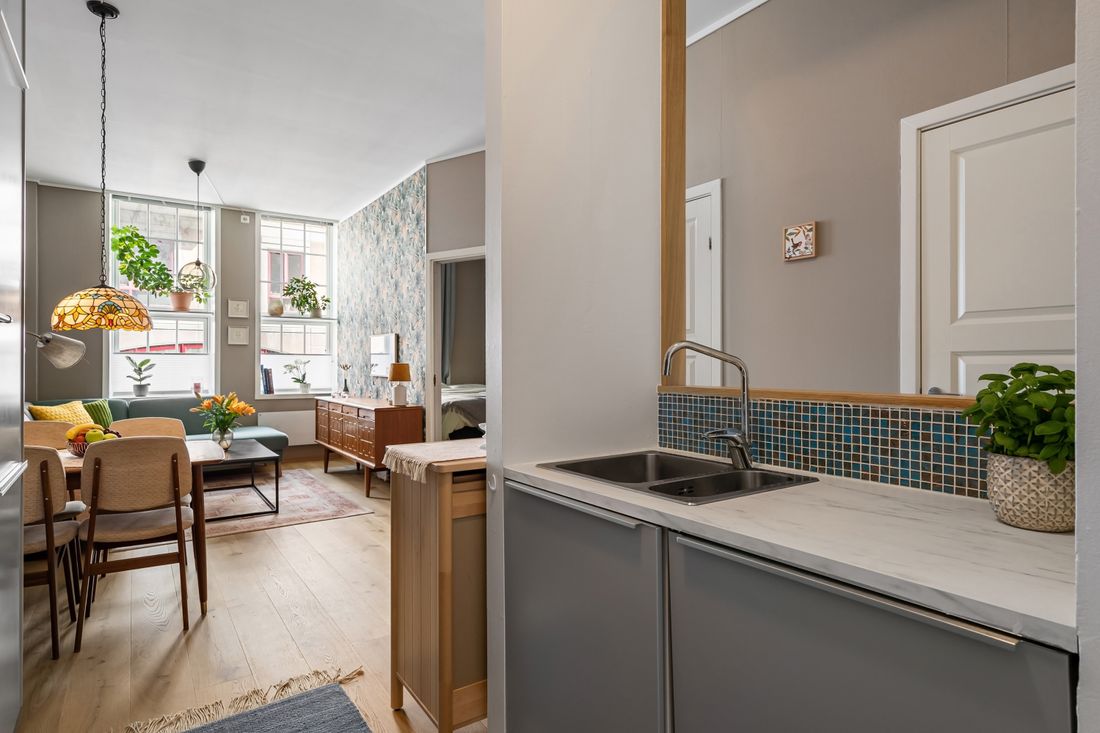
Photo: Lisa Anna · License. Illustrative stock photography.
Start with what the property allows
Read the relevant lease terms and ask about uncertain changes before purchasing materials. Painting, attaching objects, changing hardware, and applying films may have different requirements. Keep any written permission with your move-in records. Distinguish a manufacturer's marketing description from the property owner's permission: a product described as removable can still be prohibited or incompatible with a particular finish. This planning stage protects the budget from items you cannot responsibly install.
Choose one visual direction
Describe the room in a few useful words, such as quiet contrast, warm neutral, or crisp monochrome. Select a limited set of colors and materials that work with fixed finishes you cannot change. This is not a rule against personality; it is a way to compare purchases consistently. Use one existing object you like as a reference. A cohesive room often emerges from repeating a few decisions rather than replacing everything that does not match an inspiration photograph.
Work with portable layers first
Bedding, cushion covers, a suitable rug, a freestanding lamp, and small art can influence a room without changing the building. Check dimensions and care needs before buying. A rug should suit the actual door movement and walking surface, while a lamp needs a workable cable route. Choose items that serve a daily purpose as well as a visual one. Portability matters most when the item is likely to fit and function in your next home.
Treat wall products as specific systems
For adhesive hooks, strips, films, and similar products, read the exact product's surface, load, application, curing, and removal guidance. Test only where appropriate and permitted; a small test is not a guarantee of long-term performance. Older, weak, textured, or damaged finishes may be unsuitable. Do not apply a general waiting time from another product's instructions. If uncertainty remains, choose a freestanding or existing-picture-rail alternative instead of assuming all removable products behave identically.
Use furniture scale to create polish
Measure the full footprint and the route into the room before adding a piece. A fewer number of useful, well-sized items can feel more resolved than many small accessories placed on every surface. Coordinate the visual weight of tables, lamps, and storage with the furniture you are keeping. Keep required anti-tip measures in the plan. A rental restriction needs to be resolved with a suitable choice and permission, not bypassed because an unsecured piece looks good.
Plan the exit as well as the installation
Store original hardware and instructions in labeled bags. Keep records of approved changes and any product information needed for removal. Before the end of the tenancy, check the property owner's expectations and remove items according to their instructions. Do not promise that any finish will return perfectly to its original state. Designing for an eventual move encourages flexible purchases and makes the current room more deliberate, because each alteration has a purpose and a realistic end point.
Your working checklist
Checkmarks stay in this browser when storage is available. They do not submit a form or complete a booking.
Put it into practice
- Identify permitted changes and record the fixed finishes. Choose a short visual brief and photograph the existing room so you can judge proposed purchases against the actual space.
- Rearrange portable items you already own before shopping. Measure gaps, routes, and surfaces, then choose one useful layer such as a lamp, textile, or appropriately scaled art piece.
- Check each attachment or surface product individually against the lease, finish condition, and exact manufacturer instructions. Use a suitable alternative whenever permission, compatibility, or safe installation remains uncertain.
- Keep original parts and removal guidance together. Review the room after several days, remove unnecessary accessories, and make the next purchase only when it improves a specific practical or visual problem.
Before you finish
- Lease requirements are understood
- Permission is recorded where needed
- Palette suits fixed finishes
- Portable layers have a purpose
- Product instructions are specific
- Original hardware is retained
Common questions
Is peel-and-stick wallpaper safe for every rental wall?
No. Suitability depends on the exact product, finish, surface condition, installation, removal, and lease. Check these before purchase and avoid claims that all temporary wall coverings are universally damage-free.
Can I create a finished look without painting?
Yes. Repeated colors, appropriately sized textiles, thoughtful furniture placement, and useful lighting can connect a room. Start with the fixed finishes rather than treating them as something that must be disguised.
Should I replace all the existing furniture?
Usually that is unnecessary. Identify the pieces that function well and build around them. Replacing only a poor-fitting or genuinely missing item can produce a stronger result with less cost and fewer moving complications.