How to Measure Furniture, a Room, and the Delivery Route
A piece of furniture must fit more than its final wall. It needs to travel through the delivery route, work with doors and drawers open, and leave the room usable. This guide turns a promising product listing into a set of practical measurements you can verify.
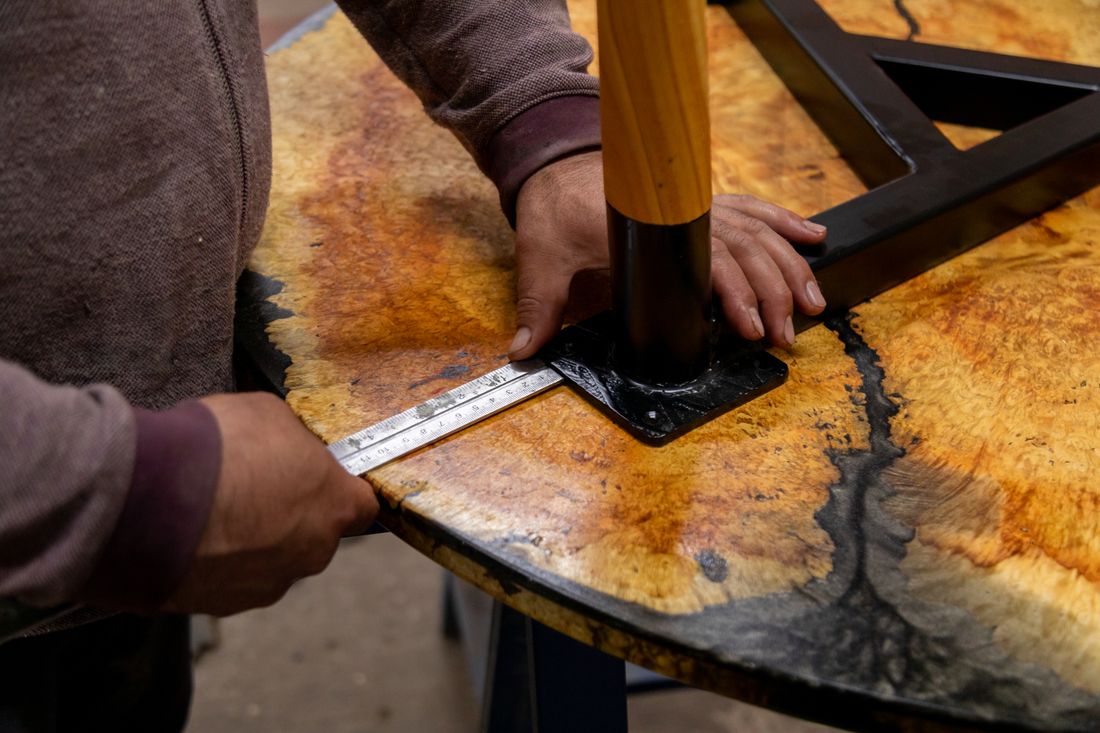
Photo: Collab Media · License. Illustrative stock photography.
Record the room as it is
Draw a simple overhead plan and label walls consistently so measurements do not become an anonymous list. Include fixed features and any projections that reduce usable space. Note door and window positions and their opening directions. Take photographs from several angles to accompany the sketch. A room need not be perfectly rectangular for a useful plan, but unusual corners should be measured directly rather than approximated from a listing or an old floor plan.
Distinguish product dimensions from usable dimensions
Record width, depth, and height from the exact model and configuration. Include handles, arms, legs, overhangs, and any projecting controls. For storage furniture, interior shelf and drawer dimensions determine whether your objects fit; exterior measurements do not tell the whole story. For a sofa, look at the complete dimensions rather than seat width alone. Confirm whether removable parts can actually be removed according to the manufacturer, rather than assuming a delivery team will dismantle anything required.
Measure the movement the furniture needs
Draw drawers extended, cabinet doors open, a reclining seat deployed, or a dining chair pulled back. For a bed with storage, show the access or lifting area. A compact closed footprint can conceal a large working footprint. Mark neighboring objects that may interfere and test the normal route while the furniture is in use. Think through ordinary tasks such as changing bedding, vacuuming nearby, or reaching a curtain, not just the moment when the item is placed.
Check every part of the delivery route
Measure door clear openings, hallway turns, stairs, landings, elevator doors, and elevator interiors where applicable. Include low ceilings or handrails that affect the route. Ask the retailer for packaged dimensions and delivery requirements; these can differ considerably from assembled measurements. Do not assume diagonal maneuvering will solve a tight turn. Send the route details to the seller or delivery service and obtain a clear answer when the fit is uncertain.
Create a full-size footprint
Use cardboard or an appropriate temporary marking method on a suitable surface to show the planned furniture footprint. Include opening movement with a second outline. Walk through the room with a laundry basket or another normal load. Sit in neighboring chairs and reach nearby storage. A full-size test can reveal an inconvenient relationship that a small sketch hides, such as a sofa arm overlapping a curtain or a drawer opening directly into the main passage.
Keep the decision record
Save the exact product reference, configuration, dimensions, route notes, and retailer's delivery answer before ordering. Read what happens if the item cannot be delivered or is unsuitable; costs and procedures vary by seller. Recheck key measurements independently before paying for a large item. This is a point to slow down, because a few extra minutes with the tape measure are easier than resolving a furniture piece that fits the inspiration image but not the home.
Your working checklist
Checkmarks stay in this browser when storage is available. They do not submit a form or complete a booking.
Put it into practice
- Draw and label the room, then record the usable wall and opening measurements. Photograph fixed features and check any unusual corner directly instead of relying on a rectangular approximation.
- Copy the exact product's assembled, working, and packaged dimensions. Include handles, opening movement, and configuration details, and ask the seller about anything the listing does not clearly explain.
- Measure the complete delivery route from arrival to final location. Share tight turns, stairs, elevators, and uncertain clearances with the retailer or delivery service before making an order.
- Create a full-size footprint and test ordinary use. Have a second check of critical measurements, then save the product and delivery records alongside the seller's applicable delivery and return terms.
Before you finish
- Exact configuration is identified
- Fixed projections are measured
- Opening movements fit
- Packaged dimensions are known
- Delivery turns were checked
- Critical measurements were rechecked
Common questions
Is the product width enough to confirm fit?
No. Depth, height, projections, opening movement, packaging, and the delivery route all matter. A cabinet may fit its wall but still prevent a drawer or nearby door from opening.
Can I assume sofa legs will come off for delivery?
No. Verify what is removable on the exact model and who is authorized to remove it. Do not rely on an improvised disassembly plan or assume the delivery team provides that service.
Should I use an online room planner?
It can help compare arrangements, but its accuracy depends on your measurements and product data. Keep a simple measured sketch and a full-size footprint test as practical checks on the digital plan.