A Closet Edit That Starts With Your Actual Week
A closet edit is a way to make clothing easier to find and use. It does not require an arbitrary item limit or a dramatic disposal session. Work in manageable sections, protect clothes while decisions are pending, and buy storage only after the remaining categories are clear.
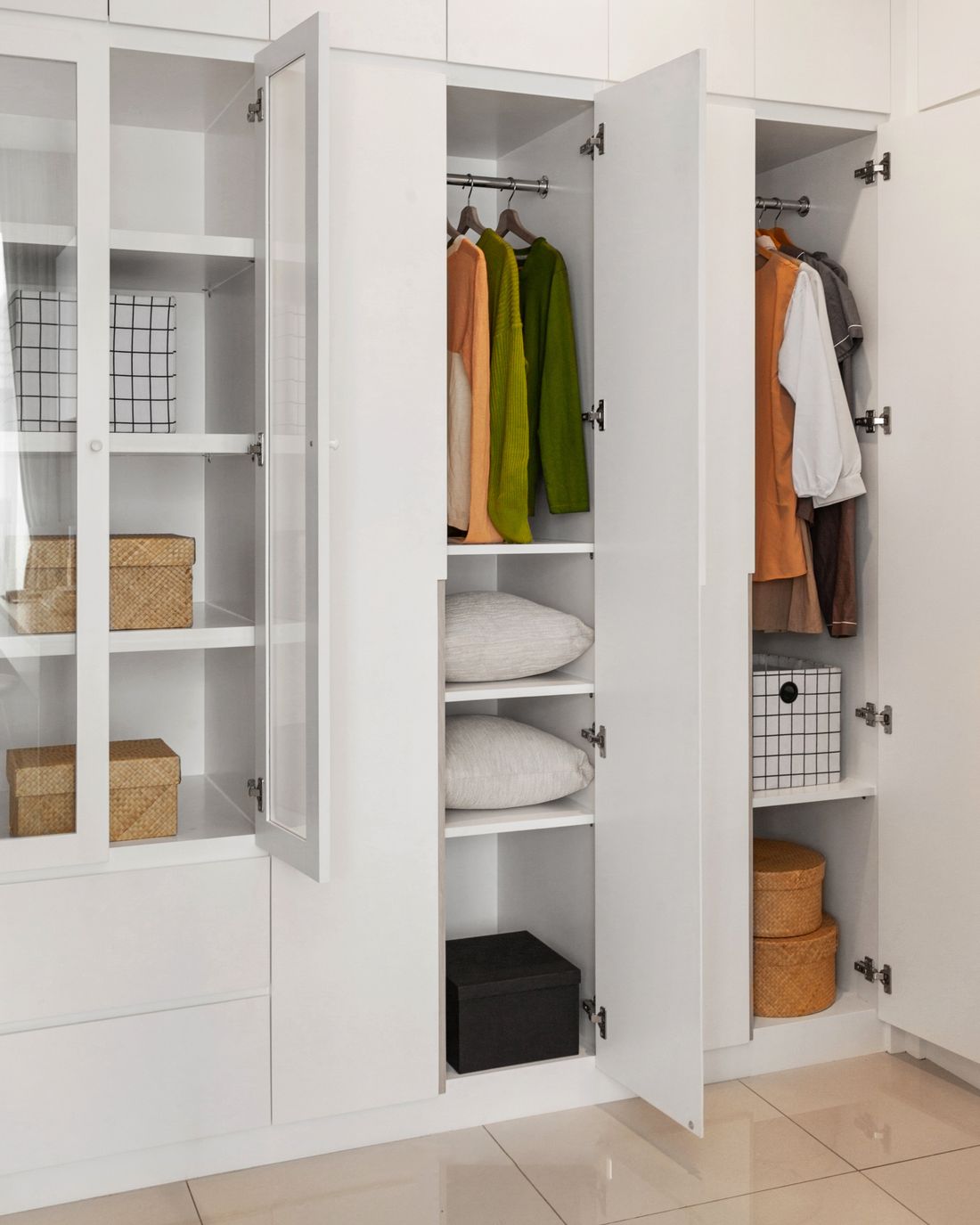
Photo: Hakim Santoso · License. Illustrative stock photography.
Describe the week you dress for
List the settings you regularly need clothing for, such as work, home, exercise, errands, and occasional events. Include laundry frequency, weather layers, and any dress requirements. A wardrobe can look full while still lacking enough suitable pieces for an ordinary week. Use this real schedule as the basis for decisions. Avoid reducing categories simply because another person's capsule wardrobe uses fewer garments; your routine and care habits may be different.
Sort one category in a limited session
Choose shirts, trousers, outerwear, or another manageable group instead of emptying the whole closet at once. Create clear positions for keep, repair, undecided, and ready to leave. Check pockets and separate garments needing cleaning before storage or donation. Keep the work area usable and finish the session by returning retained items to a home. A partial edit that is completed is more practical than a roomful of bags that remain unresolved for weeks.
Make the keep decision specific
Ask whether the garment suits a real situation, works with other clothing you own, and can be worn in its present condition. Fit and personal comfort matter more than a label or an imagined future version of your life. Sentimental pieces can have a separate limited storage category rather than crowding daily clothing. An item does not have to be perfect to stay, but its role should be understandable when you look at it again later.
Give repairs and uncertainty a deadline
Write the required action on each repair item: replace a button, mend a seam, or obtain a professional alteration assessment. Decide when it will be done and whether the effort makes sense for the garment. Keep uncertain items in a small review group with a date rather than mixing them invisibly back into the wardrobe. The goal is not to force quick disposal; it is to prevent an undefined decision from occupying permanent daily storage.
Rebuild around easy retrieval
Group clothing by the method you use to choose an outfit, such as type, work category, or frequently worn combinations. Keep daily garments in easy reach and suitable occasional pieces elsewhere. Choose hangers and folding methods appropriate to the clothing and its care. Do not overload rails, shelves, or doors beyond their instructions. Labels can help shared or seasonal storage, but the system should remain understandable without remembering a complex classification scheme.
Create a gap list before shopping
After the edit, build several real outfits and identify a missing role rather than browsing for general improvement. A specific gap might be a layer that works with two existing outfits or a replacement for a worn essential. Check what can be repaired, restyled, or moved from another category first. Keep outgoing items in an appropriate clean condition and use suitable local donation, resale, or textile disposal options; acceptance and recycling arrangements vary by location.
Your working checklist
Checkmarks stay in this browser when storage is available. They do not submit a form or complete a booking.
Put it into practice
- Write the clothing situations in an ordinary week and select one category to edit. Set a session you can finish and prepare clearly labeled temporary positions before moving garments.
- Inspect each item for its current role, condition, and fit. Return useful pieces, record specific repair actions, and place genuinely uncertain garments in a limited review group with a date.
- Reorganize retained clothing around easy retrieval, respecting garment care and storage capacity. Test the arrangement by building a few actual outfits and putting them away again without an elaborate process.
- Make a short gap list and handle outgoing items through appropriate local options. Review the repair and undecided groups on the chosen date so the edit produces lasting usable space.
Before you finish
- Real clothing needs are listed
- One category can be finished
- Repairs have specific actions
- Uncertain items have a date
- Rails are not overloaded
- Shopping gaps describe a role
Common questions
How many clothes should I keep?
There is no universal number. The useful amount depends on your routine, laundry access, climate, storage, and preferences. Keep a wardrobe you can use and maintain rather than copying an arbitrary count.
Must I donate everything I have not worn recently?
No. Seasonal, occasion, work, and sentimental items need context. Identify a credible role and suitable storage. A review date can help with uncertain items without forcing an immediate irreversible decision.
Should I buy matching hangers first?
Not before understanding the clothes and available space. Suitable existing hangers may work well. Choose any replacements for garment care, strength, and rail capacity, with visual consistency as an additional preference.